“At last, the famous St George’s Hill at Weybridge, in Surrey has come on to the market, and is to be developed for the erection of a limited number of high-class country houses on lines worthy of its traditions. The Estate consists of nearly a thousand acres of high and finely wooded land, the greater elevations commanding superb views over the surrounding country. Weybridge can be reached in half an hour from Waterloo by numerous fast trains that bring it within easier reach of the Metropolis than many other favourite residential towns that lie nearer London.”
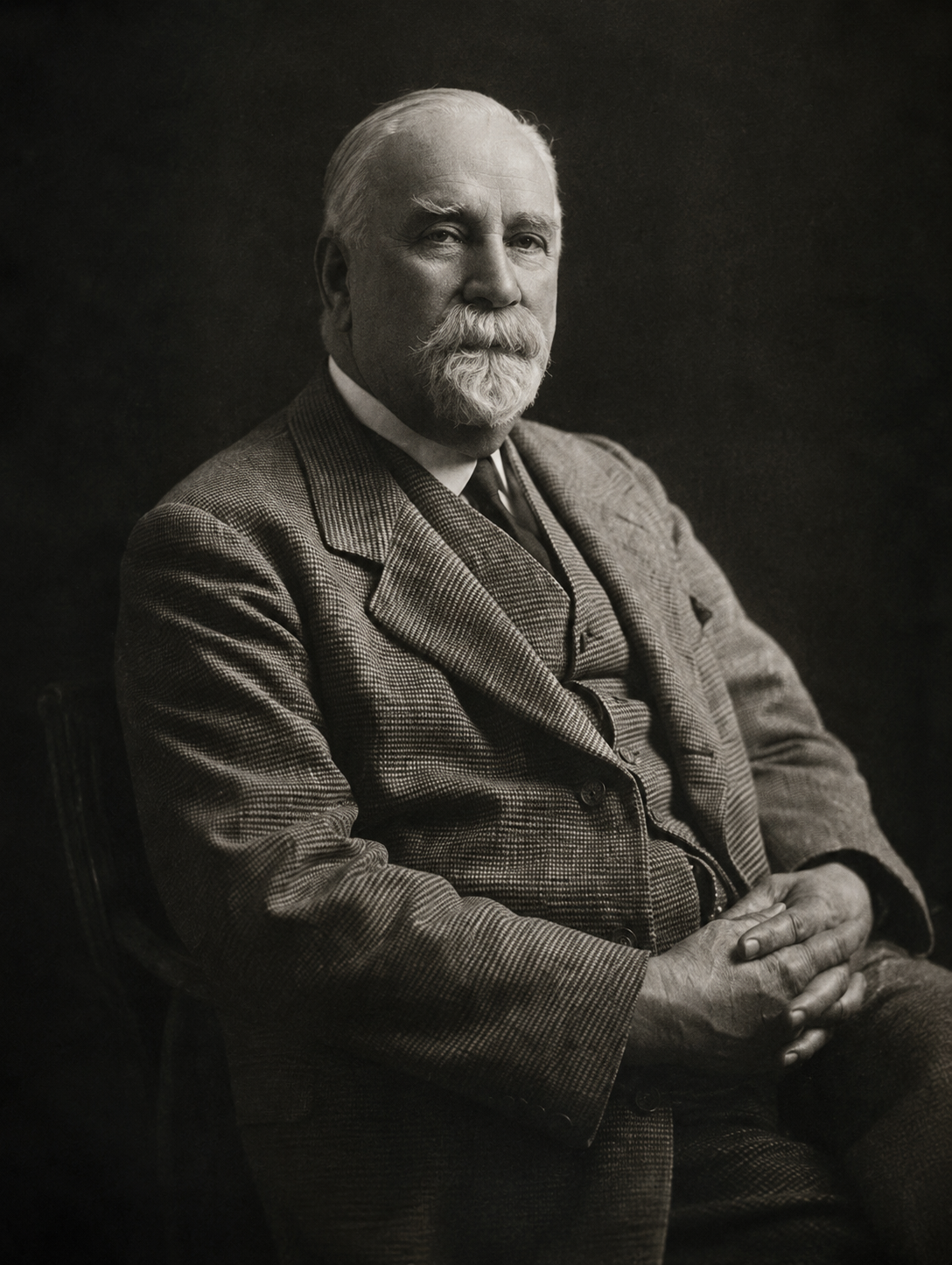
Walter George Tarrant
The history of the Estate we now recognise as St George’s Hill includes the existence of an ancient Iron Age hill fort and a short period of occupation by social pioneers “the Diggers” in 1649.
The land was acquired by Prince Frederick, Duke of York and Albany in 1804 and came into the possession of the Egerton family during the reign of Queen Victoria. In 1911, the family sold 964 acres to Surrey Master Builder Walter George Tarrant. His ambition was to create the ultimate residential estate, where wealthy professionals and captains of industry could enjoy peace and privacy in a beautiful woodland setting.
Tarrant aspired to incorporate excellent sporting facilities into the Estate. In 1912 he commissioned renowned golf course architect Harry Colt to create a private 18-hole course. The course opened for play in 1913 and is internationally renowned for its visual appeal. In 1915 Prince Alexander of Teck and his wife Princess Alice officially opened St George’s Hill Lawn Tennis Club.
Residential development on St. George’s Hill continued steadily until the outbreak of the first World War. In October 1914, Tarrant’s company was commissioned by the Director of Works (France) to build prefabricated wooden huts for the British Expeditionary Force. A shortage of timber and labour resulted in Tarrant training and employing women carpenters to build the huts. The women travelled to France to reassemble them.
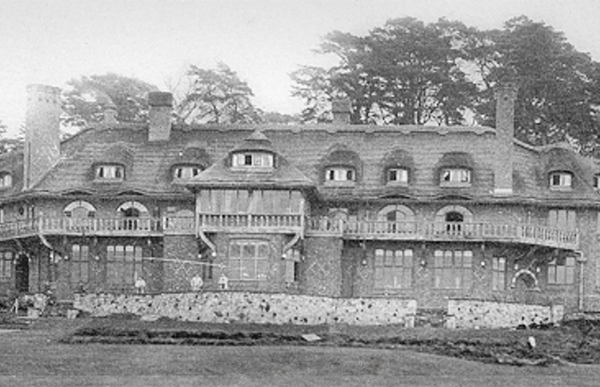
By the 1920s, Tarrant’s company employed five thousand people in Blyfleet. The original houses built by Tarrant on St. George’s Hill were imposing mansions, designed in the distinctive Arts and Crafts style, using Surrey vernacular elements like hand-made bricks and tile-hung facades. In the years following the war, homes were often smaller but the exceptionally high standards of construction were maintained. The area developed rapidly, transforming from a “wooded wilderness” to a “hillside studded with mansions”.
In its early decades, St George’s Hill could be visited by visitors and picnickers, but access was restricted to the public in 1928. Some of The Beatles purchased houses here in the 1960s, and in the years since the Estate has attracted many famous names.
Today, St George’s Hill remains an instantly-recognisable address, offering its residents the same combination of privacy and exclusivity in a setting of exceptional natural beauty.
1911
In 1911, Surrey master builder W. G. Tarrant bought 964 acres of land on St George’s Hill, Weybridge, from the Egerton family, and set about planning his ideal residential estate, where wealthy professionals and captains of industry could enjoy peace and privacy in surroundings of natural beauty. Facilities for sport and exercise were an essential element of Tarrant’s vision, and he immediately commissioned golf course designer H. S. Colt to create a private 18-hole course on the estate.
1912
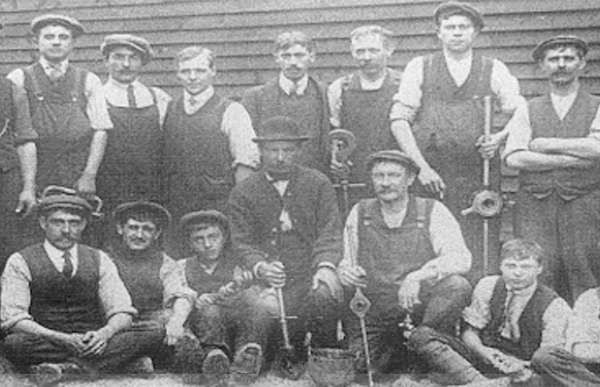
The first plans, for two houses and an estate office at Weybridge station, were approved by Weybridge Urban District Council on 3rd April 1912; plans for a further three houses and an entrance lodge at Byfleet Road were approved by the Council on 1st June 1912; all the houses were near the main entrance in Byfleet Road, now Brooklands Road. Tarrant’s system was to build three houses at the same time, with a gang of about a hundred men under one foreman. The men worked a ten-hour day, 56 1/2 hours a week, from 6 a.m. to 5.30 p.m. Mondays to Fridays, with half an hour off 8 to 8.30 a.m. and one hour from 1 to 2 p.m., and from 6 a.m. to 1 p.m. on Saturdays, with half an hour’s break.
Text © Mavis Swenarton 1993
1913
In 1913 the wages for labourers were 6d an hour, for bricklayers and carpenters 81/2d, and for plasterers 9d an hour, plastering being skilled and heavy work; thatchers received one shilling an hour. Tarrant’s workforce is said to have numbered about 5000 in the 1920s, with an administrative staff of around seventy.
1914
Development on St. George’s Hill continued steadily until the outbreak of war in August 1914. By October 1914 Tarrant was under contract to the Director of Works (France) to build portable wooden huts for the British Expeditionary Force.
1916
In 1916, when the shortage of timber and labour in France had become acute, he trained women carpenters at his works at Byfleet to build the huts, which were then dismantled and shipped across the Channel, while the women travelled to France to re-assemble them.
1920
The early houses built by Tarrant on St. George’s Hill were mostly of three storeys and several were very large and imposing. The houses built in the 1920s on St. George’s Hill and Wentworth Estate were mostly smaller, of only two storeys, but built to an equally high standard.